
For many families, teaching kids about money starts with coins, cash, and a piggy bank. But as our world becomes more and more digital and children get older, introducing modern tools like checking accounts, debit cards, and online banking is essential. When guided well, these tools can help kids and teens practice responsibility, understand spending choices, and build healthy savings habits early. The key is to keep the lessons simple, hands-on, and age-appropriate.
How Checking Accounts and Debit Cards Can be Helpful Tools
A checking account and debit card can give kids a practical way to learn how money moves. They can learn how deposits increase their balance, how purchases or withdrawals reduce it, and why it matters to keep track of what is available. This builds awareness that money should be monitored, not guessed.
Checking accounts can also support responsibility. Families may use them to manage allowance, provide rewards for grades, or pay money earned for helping at home. When kids see money coming in and going out, they begin to understand that financial choices have consequences and that planning ahead matters.
Important Lessons Before Your Child Starts Using a Debit Card
- Only spend what you have. This is a simple, but essential idea. Think of debit cards like digital cash – spending more cash than you have can cause confusion, create fees or other penalties, and take away from their hard-earned savings.
- Regularly check the balance. Check your account balance and purchases with online banking to help your child ensure they are always aware of how much funds they have. Teaching your child to stay updated on their account activity, even if they haven’t used their card recently, can help discourage overspending, prevent regretful purchases, and to find and prevent fraud early in the event someone accesses their account details.
- Keep your card number, PIN and all account passwords private. It’s not uncommon for teens to be targeted by fraudsters. Scammers may impersonate other users or people they know on social platforms in an attempt to steal information. As young family members get acquainted with the digital financial world, make sure they know to never share account details or any other personal information on social platforms, online games and chats, or across other unsecure websites. Keeping sensitive account information secure is the first and best defense for your child’s account.
- Talk through purchases ahead of time. Thinking through purchases, especially large items that require more funds, can build awareness and confidence. It’s easier to spend money than it is to earn it – being confident about big purchases can help prevent feeling regretful later.
Create Meaningful Money Lessons in Everyday Life
Debit cards teach teens how purchases work in real life. They’re a useful tool for connecting the money spent to the amount of money left in their account, and for teaching them how convenience and responsibility go hand in hand.
At the same time, debit cards present a unique challenge that cash transactions do not. With cash, kids can physically see the money leave their hands. With a debit card, that spending can feel less visible and easier to lose track of. Tracking account activity and reviewing transactions can help kids become more mindful spenders.
Connecting your youngest family member’s checking account and debit card to something meaningful can help teach ideas about the way money works. When kids watch their progress over time, they feel more motivated to stay engaged. Small wins, like choosing to save part of their allowance instead of spending it all, can help build confidence. Families can use chores, good grades, taking care of pets, or other accomplishments as a way for kids to “earn” their money. This helps build a connection between effort, responsibility, and financial choices.
Early Hands-On Financial Learning with My First Nest Egg
According to Experian, most of a child’s lasting money management skills are set by age 7. Hands-on experience – with your guidance – is essential for creating strong foundational knowledge. Families looking for extra support may benefit from tools designed specifically for younger learners.
For kids who are too young for a checking account or for those wanting some extra engagement, My First Nest Egg is a perfect way to get started. My First Nest Egg is a financial education app created to help children build healthy money habits early through hands-on learning. Chaffey Federal Credit Union offers free access to the app as a part of our financial education initiative.
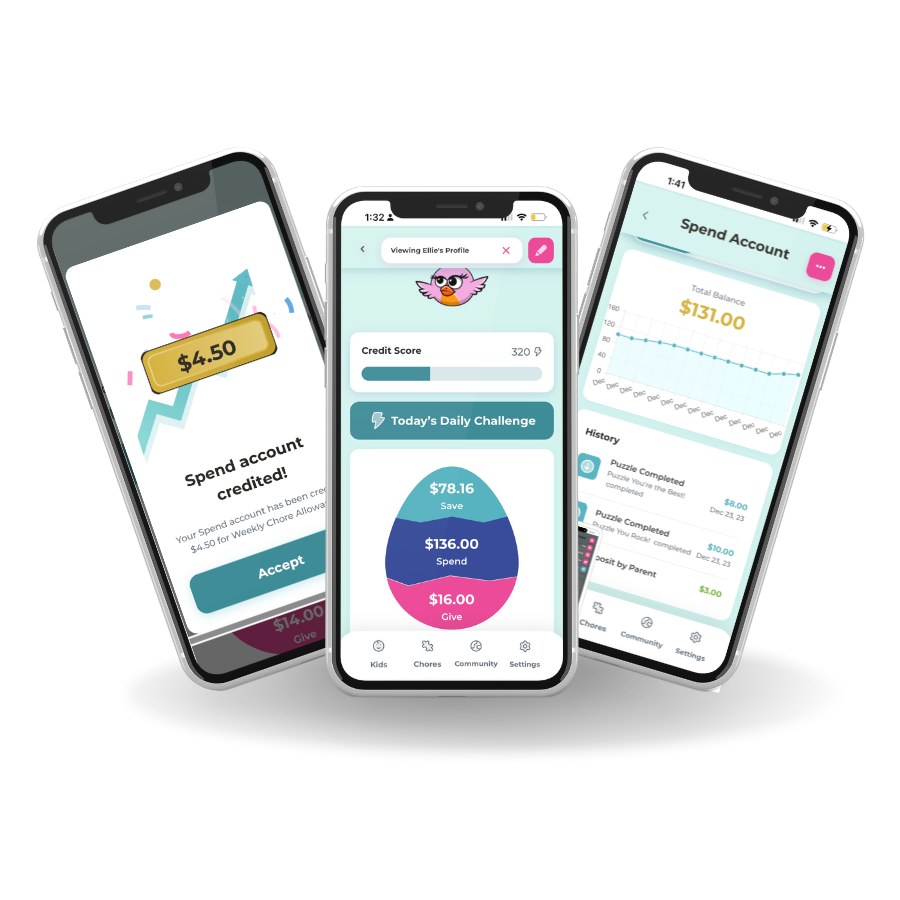
- Set goals for your child in the app to reinforce the concept of delayed gratification.
- Reward your child with puzzle pieces for positive behavior to encourage steady progress. Money is earned when the puzzle is complete!
- Practice smart spending with the digital piggy bank. Set aside money for spending, saving, and charitable donations
- Engage with daily lessons to help kids build a strong financial foundation, all for just under one minute a day!
My First Nest Egg can work especially well alongside Chaffey Jr Checking and Savings Accounts by giving kids a place to practice money habits while learning what saving and spending mean in everyday life.
Start the Conversation at Home
Teaching financial responsibility does not mean stepping back completely. In fact, kids often learn best when adults stay engaged and offer guidance along the way. How you use and discuss money at home is already setting the foundation for your child’s financial skillset. Including your youngest family members in conversations about financial choices can help introduce healthy habits. The Consumer Financial Protection Bureau has tips for discussing common financial choices, such as getting a new car or family pet. The goal is to give children real experience, while still keeping support in place.
- Problem Solving: What problem does the financial choice or purchase solve? What would happen if you didn’t buy it?
- Prioritizing: What sort of purchases could solve the issue? Do the solutions cost the same amount of money or have different benefits?
- Planning: What else goes into this purchase? If you’re buying a car, discuss gas, repairs, and insurance. Do you need to borrow money to make this purchase?
- Comparing: Why is one item better or more cost effective than the others? If you need to borrow, how can different loan types solve different issues?
With a Chaffey Jr Checking Account, young family members can implement hands-on financial skills, while prioritizing account safety. These accounts offer weekly activity e-mail alerts and online banking, which can help families stay aware of account activity. These tools support regular conversations about spending, saving, and decision-making. Instead of waiting until there is a mistake, families and kids can review what is happening as they go.
With the right guidance, children can learn how to track spending, protect account information, and make more thoughtful money choices. Help your younger family members build independence gradually. They shouldn’t be left to figure everything out alone, but give them the opportunity to make choices, ask questions, and learn from real situations.