Are you asking the right Medicare Questions? This free workshop was designed to help you better understand your Medicare options and find the plan that fits your needs.
Join us for an evening of snacks, refreshments, and Medicare education to set you on the right path!
Sandy Salcido is the Principal Agent for Take Action Insurance Services, Inc., specializing in all types of Medicare insurance options for the last 16 years, and located in Rancho Cucamonga since 2014. She has worked with 100’s of clients, both English and Spanish, helping them understand and choose the plan that works best for them. From the initial Medicare enrollment process, annual reviews and ongoing customer service, Sandy is available as your local resource at no cost to you.
For many families, teaching kids about money starts with coins, cash, and a piggy bank. But as our world becomes more and more digital and children get older, introducing modern tools like checking accounts, debit cards, and online banking is essential. When guided well, these tools can help kids and teens practice responsibility, understand spending choices, and build healthy savings habits early. The key is to keep the lessons simple, hands-on, and age-appropriate.
How Checking Accounts and Debit Cards Can be Helpful Tools
A checking account and debit card can give kids a practical way to learn how money moves. They can learn how deposits increase their balance, how purchases or withdrawals reduce it, and why it matters to keep track of what is available. This builds awareness that money should be monitored, not guessed.
Checking accounts can also support responsibility. Families may use them to manage allowance, provide rewards for grades, or pay money earned for helping at home. When kids see money coming in and going out, they begin to understand that financial choices have consequences and that planning ahead matters.
Important Lessons Before Your Child Starts Using a Debit Card
Only spend what you have. This is a simple, but essential idea. Think of debit cards like digital cash – spending more cash than you have can cause confusion, create fees or other penalties, and take away from their hard-earned savings.
Regularly check the balance. Check your account balance and purchases with online banking to help your child ensure they are always aware of how much funds they have. Teaching your child to stay updated on their account activity, even if they haven’t used their card recently, can help discourage overspending, prevent regretful purchases, and to find and prevent fraud early in the event someone accesses their account details.
Keep your card number, PIN and all account passwords private. It’s not uncommon for teens to be targeted by fraudsters. Scammers may impersonate other users or people they know on social platforms in an attempt to steal information. As young family members get acquainted with the digital financial world, make sure they know to never share account details or any other personal information on social platforms, online games and chats, or across other unsecure websites. Keeping sensitive account information secure is the first and best defense for your child’s account.
Talk through purchases ahead of time. Thinking through purchases, especially large items that require more funds, can build awareness and confidence. It’s easier to spend money than it is to earn it – being confident about big purchases can help prevent feeling regretful later.
Create Meaningful Money Lessons in Everyday Life
Debit cards teach teens how purchases work in real life. They’re a useful tool for connecting the money spent to the amount of money left in their account, and for teaching them how convenience and responsibility go hand in hand.
At the same time, debit cards present a unique challenge that cash transactions do not. With cash, kids can physically see the money leave their hands. With a debit card, that spending can feel less visible and easier to lose track of. Tracking account activity and reviewing transactions can help kids become more mindful spenders.
Connecting your youngest family member’s checking account and debit card to something meaningful can help teach ideas about the way money works. When kids watch their progress over time, they feel more motivated to stay engaged. Small wins, like choosing to save part of their allowance instead of spending it all, can help build confidence. Families can use chores, good grades, taking care of pets, or other accomplishments as a way for kids to “earn” their money. This helps build a connection between effort, responsibility, and financial choices.
Early Hands-On Financial Learning with My First Nest Egg
According to Experian, most of a child’s lasting money management skills are set by age 7. Hands-on experience – with your guidance – is essential for creating strong foundational knowledge. Families looking for extra support may benefit from tools designed specifically for younger learners.
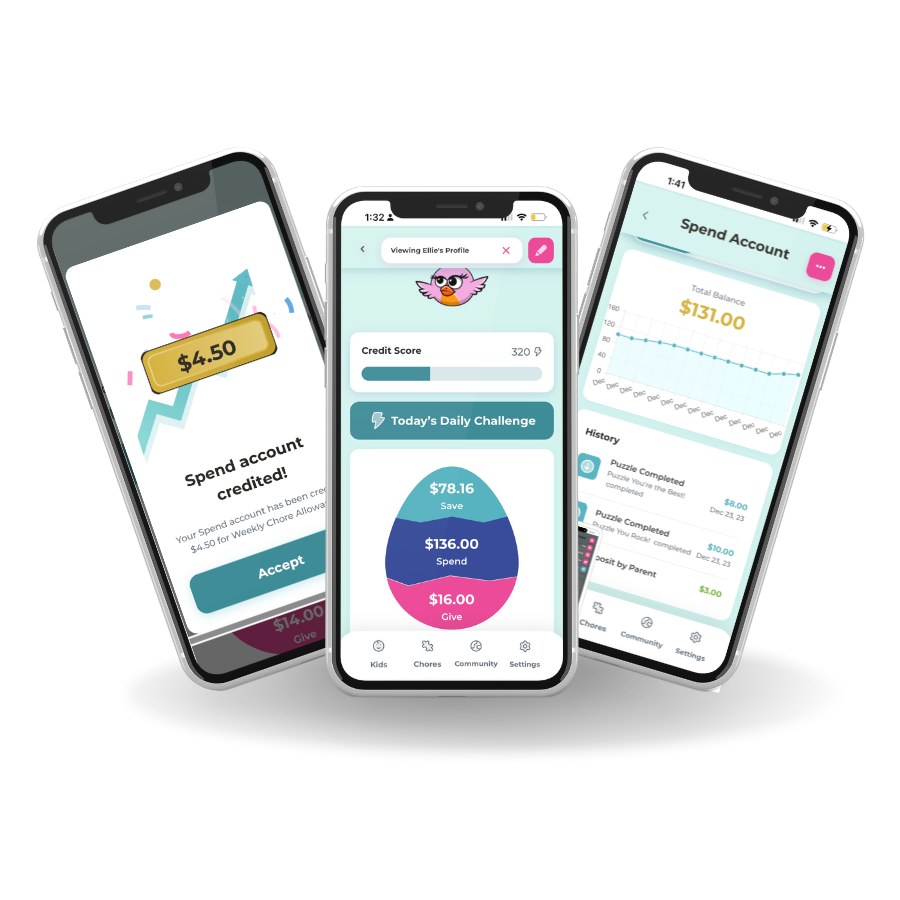
For kids who are too young for a checking account or for those wanting some extra engagement, My First Nest Egg is a perfect way to get started. My First Nest Egg is a financial education app created to help children build healthy money habits early through hands-on learning. Chaffey Federal Credit Union offers free access to the app as a part of our financial education initiative.
Set goals for your child in the app to reinforce the concept of delayed gratification.
Reward your child with puzzle pieces for positive behavior to encourage steady progress. Money is earned when the puzzle is complete!
Practice smart spending with the digital piggy bank. Set aside money for spending, saving, and charitable donations
Engage with daily lessons to help kids build a strong financial foundation, all for just under one minute a day!
My First Nest Egg can work especially well alongside Chaffey Jr Checking and Savings Accounts by giving kids a place to practice money habits while learning what saving and spending mean in everyday life.
Teaching financial responsibility does not mean stepping back completely. In fact, kids often learn best when adults stay engaged and offer guidance along the way. How you use and discuss money at home is already setting the foundation for your child’s financial skillset. Including your youngest family members in conversations about financial choices can help introduce healthy habits. The Consumer Financial Protection Bureau has tips for discussing common financial choices, such as getting a new car or family pet. The goal is to give children real experience, while still keeping support in place.
Problem Solving: What problem does the financial choice or purchase solve? What would happen if you didn’t buy it?
Prioritizing: What sort of purchases could solve the issue? Do the solutions cost the same amount of money or have different benefits?
Planning: What else goes into this purchase? If you’re buying a car, discuss gas, repairs, and insurance. Do you need to borrow money to make this purchase?
Comparing: Why is one item better or more cost effective than the others? If you need to borrow, how can different loan types solve different issues?
With a Chaffey Jr Checking Account, young family members can implement hands-on financial skills, while prioritizing account safety. These accounts offer weekly activity e-mail alerts and online banking, which can help families stay aware of account activity. These tools support regular conversations about spending, saving, and decision-making. Instead of waiting until there is a mistake, families and kids can review what is happening as they go.
With the right guidance, children can learn how to track spending, protect account information, and make more thoughtful money choices. Help your younger family members build independence gradually. They shouldn’t be left to figure everything out alone, but give them the opportunity to make choices, ask questions, and learn from real situations.
Chaffey FCU’s Lending Specialists strive to connect with our Membership to help them meet their financial goals. Stop by to meet with a Member of our Lending Team face-to-face to discuss your lending needs, questions, or education.
Summer may be in full swing, but back-to-school planning has already started. Before you know it, you’re making supply lists, writing lesson plans, or helping your kids get ready for the new school year.
If you’re an educator, you may be thinking beyond your own shopping list. Teachers spent an average of $895 out of pocket on classroom supplies during the 2024–2025 school year, often making those purchases to create better learning environments for their students.
Families also have their own budgets to manage. Nearly half plan to spend more on back-to-school shopping this year, with average spending expected to reach $922.
These tips can help you save on this year’s expenses, prepare for the months ahead, and use resources designed to support educators and families.
START WITH A CLASSROOM SPENDING PLAN
Teachers shouldn’t have to use their own income to cover basic classroom needs. Yet school-provided budgets only stretch so far. According to AdoptAClassroom.org, teachers reported receiving a median supply budget of $200 during the 2024–2025 school year. And 97% said it wasn’t enough to cover everything they needed.
A spending plan won’t solve that larger funding gap, but it can help you decide where your own money will have the greatest impact. Start with the supplies your students use every day. Then make room for the extras that improve organization, comfort, and creativity in your classroom.
Quick classroom budget check
Before you start shopping:
Take inventory: Check cabinets, drawers, and storage bins before adding anything to your list.
Separate needs from nice-to-haves: Buy the essentials first and revisit the rest after the school year begins.
Use available resources first: Look into school reimbursements, educator discounts, community donations, grants, and other support programs.
Set a personal spending limit: Decide what you can comfortably contribute before the sales and wish lists start adding up.
Leave a little breathing room: A small cushion can help cover unexpected needs during the first few weeks of school.
Your commitment to your students matters. Your own financial wellness deserves the same care. A thoughtful plan helps you support your students while protecting yourself, too.
STRETCH YOUR CLASSROOM BUDGET
Once you’ve checked for school resources and set a personal spending limit, prepare a strategy to get a little more from the money you choose to spend.
Look for community support
Before paying for remaining supplies yourself, check what support may already be available. Your school or district may offer reimbursements, grants, shared supply closets, or funds that aren’t widely advertised. PTAs, education foundations, local nonprofits, and community supply drives may also be able to help.
Educators across San Bernardino and Los Angeles counties can start close to home. Ask your school administration, district office, or local education foundation about programs for the coming year. You can also share specific classroom needs through established platforms such as DonorsChoose or AdoptAClassroom.
Shop early for the basics
July brings all the back-to-school promotions. Focus on predictable items you know you’ll use, such as notebooks, pencils, folders, and paper. You can wait on specialized supplies until you have a better sense of your students’ needs.
Compare the full cost
Check prices across stores before placing a large order. Educator discounts, loyalty rewards, coupons, and store brands may help you bring down the total. Price matching can also save you an extra trip.
Split bulk purchases with coworkers
A large pack may offer the best price per item, but may not make sense for one classroom. Coordinate with another educator and divide supplies such as glue sticks, markers, tissues, or printer paper.
Chaffey FCU in the community In 2025, we reached more than 3,100 students through financial education classes, workshops, and Bite of Reality simulations. With our community’s support, we also donated more than $34,000 to schools, local organizations, and shelters.
Track your purchases
Keep the receipts from your classroom purchases throughout the year. Eligible educators may be able to deduct up to $300 for supplies, professional education, and more. Visit IRS.gov for more information.
GET HELP WITH ESSENTIAL CLASSROOM PURCHASES
Some classroom needs can’t wait for another sale or funding opportunity. Chaffey FCU’s School Employee Supplies Loan helps eligible educators and school employees cover those expenses now.
Chaffey members who work for a school or district can borrow up to $1,000 with a 0% APR. The funds can go toward learning resources, office technology, organizational tools, and other classroom essentials.
To apply, submit your most recent paycheck stubs. No credit check or direct deposit is required. It’s one more way to get the tools your students need while giving your own budget a little more breathing room.
For parents, the shopping list extends far beyond notebooks and pencils. Clothing, technology, books, activity equipment, and last-minute fees all compete for the same dollars. Try starting with one total spending limit, then giving each category its own share before you shop.
PwC’s research offers a helpful starting point for allocating a back-to-school budget to make the most of your budget.
Sample back-to-school budget
30% for clothing and shoes
25% for technology
17% for after-school activities
13% for school supplies
10% for books and educational materials
5% for other one-time purchases
Your family’s priorities may look different. A child who already has a working laptop may need more room in the budget for new clothes or sports equipment. Check what you have, review the school’s requirements, and adjust the categories around your actual needs.
WAYS FAMILIES CAN SAVE ON BACK-TO-SCHOOL SHOPPING
Among the 64% of parents who expect inflation to impact their shopping, ⅓ plan to use at least 3 cost-saving strategies. A few small choices can work together to reduce your overall total and make the back-to-school season exciting rather than stressful.
Buy the essentials first
Start with the items your child needs for the first day. Teachers may add or adjust supplies once classes begin, so waiting on extras can help you avoid unnecessary purchases.
Compare prices
A few dollars may not feel significant for a pack of pencils, but the savings can add up quickly on shoes, electronics, and other high-cost items. Check sale prices, coupons, loyalty offers, and price-matching policies before you buy.
Reuse what still works
Backpacks, lunch boxes, binders, calculators, and art supplies may have another school year left in them. Give last year’s items a quick check before replacing them.
Mix new items with lower-cost options
Store brands work well for everyday basics. Secondhand stores, resale apps, and community groups may also have gently used clothing, books, instruments, or sports gear for less.
Spread out your purchases
July brings back-to-school shopping in full swing. Shopping over several weeks gives you more time to watch for sales and keeps the full expense from landing on one paycheck.
GIVE NEXT YEAR’S SCHOOL BUDGET A HEAD START
Once this year’s shopping is done, look back at what you spent to get a realistic savings goal for next summer. Divide it across the months ahead to spread out the costs and boost your savings.
Chaffey FCU’s Summer Savings Club can help. The account is now available to all Chaffey FCU members, making it useful for both educators and families.
Here’s how it works:
Deposit $50 to $2,000 each month via direct deposit or payroll deduction
Earn a fixed 5.80% APY (5.678% APR) for the 2026–2027 program year
Receive dividends quarterly and when the account matures in June 2027
Withdraw funds early without a penalty, though any uncredited dividends will be forfeited
Open to all Chaffey FCU members
A little saved each month can give you more room to focus on the year ahead, and less to add up when July rolls around again.
Learn more about the Summer Savings Club and start building next year’s back-to-school fund.
Imposter Scams have recently been named the #1 most common scam in 2025 by the Federal Trade Commission – this is the 9th year in a row Imposter Scams have topped the charts. In 2025 alone, that totaled up to over 1 million imposter scam reports with total losses of $3.5 billion. These numbers don’t even include all of the cases that don’t get reported.
Understanding imposter scams is the first (and strongest) defense to keep you protected from the most common scam type across the United States.
How to Identify an Imposter Scam
Imposter Scams commonly reach victims through a variety of different channels: phone calls, emails, text messages, or social media. By faking caller ID and email addresses, using fake ID numbers, or replicating official messages, scammers attempt to trick you into thinking they are with a legitimate business or government organization.
The key to differentiating Imposter Scams from official messages, is how they communicate with you:
Pressure you with false urgency or emergency scenarios
Threaten you with penalties, fines, or legal activity
Ask you to pay with unusual payment methods: wires, Zelle, cryptocurrency, mailing cash or gift cards, or even sharing account details
Provide suspicious links, inconsistent grammar, or misspelled words and websites
The Most Common Types of Imposters to Look out For
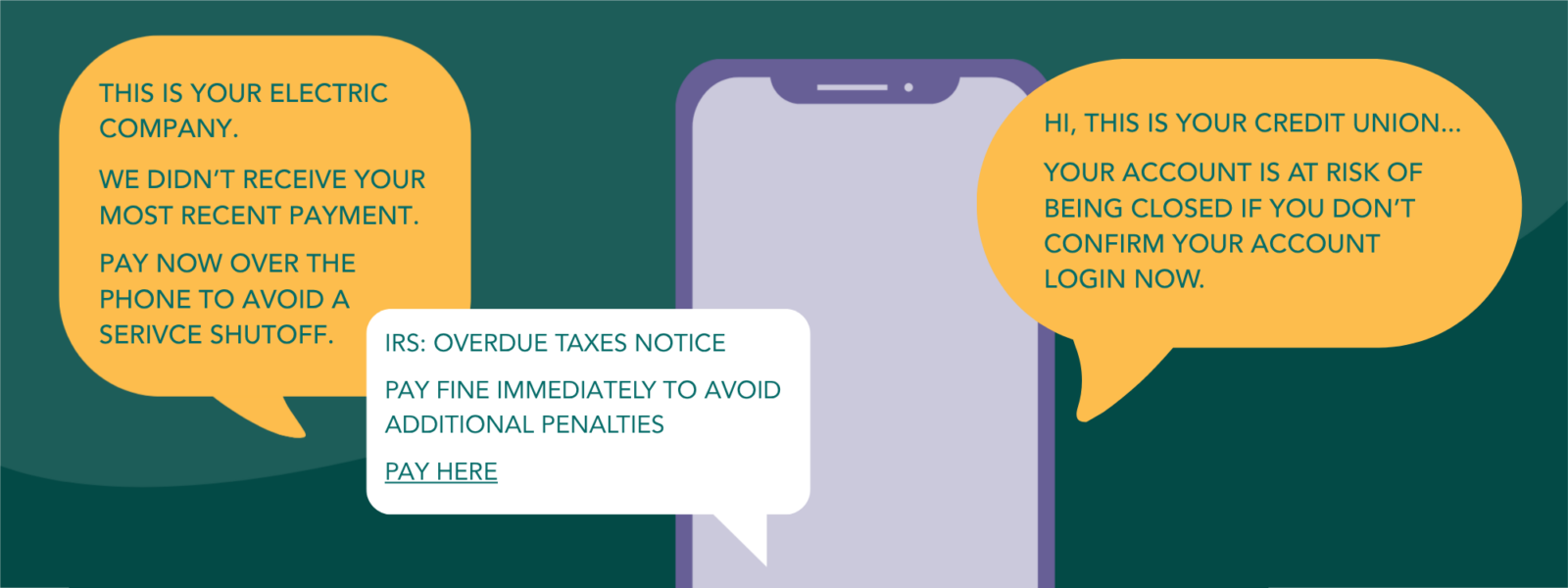
Government Organizations: Scammers may pose as representatives from a variety of Government Organizations, hoping to scare you into acting fast without any additional thought. If you receive an unexpected, urgent message from a Government Official, it’s likely you have received a scam attempt:
Utility Services: By pretending to be a representative from gas, electric, or internet services, fraudsters get victims to act quickly by threatening to shut off services due to “unpaid fees” unless you send funds or share payment details immediately.
Financial Institution: Scammers contact you posing as an employee at your credit union, the National Credit Union Administration or other financial institution. They often pressure victims to move funds or share account details, and may threaten fees, account closure, or compromised accounts to get you to act quickly.
Charity Groups: Fraudsters will pose as charitable groups via website spoofing, posting on fundraising sites, or faking community outreach. They aim to take funds intended for actual charities and organizations. These scams tend to spike after emergencies or national disasters when more people seek to donate support to the impacted groups.
Delivery Services: If you have ever received a delivery related message without ordering an item, you likely received a Delivery Service scam. Scammers will pose as FedEx, UPS, or other services by sending you a message asking you to confirm an order, pay a delivery fee, or resolve an issue when the link actually works to steal your information.
Family or Friend Impersonators: With evolving technology, some scammers now spoof Caller ID or use voice replication technology to clone voices from videos shared social media or other online sources. They use these tools to pretend to be known family members, asking you to send funds to help them over an unexpected cost or to help them get out of trouble.
Stay Skeptical. These fraud attempts work by scaring, pressuring, and rushing their victims. By keeping an air of caution around any unexpected communications, you can distance yourself from being emotionally moved by potential scammers.
End the Conversation. Step away from the text, call, social media account or other message to allow yourself time to think or calm down before reacting.
Call the official contact number of the organization, company, or institution from their official website to confirm if there is an actual concern or if a scammer contacted you. If you are a potential victim of a Family Member or Friend Imposter Scam, call the number saved in your contacts or a mutual connection.
Contact Chaffey FCU and report the attempt. If you had communication with a scammer and are unsure if you provided any potentially sensitive information, a Chaffey FCU representative can help you determine if any additional precautions should be taken.
Why You Should Report Imposter Scams
Imposter Scams are often large-scale operations: if you come across an Imposter Scam, there’s likely countless other individuals the scammers are targeting. While not every case can be resolved, reports help officials create cases to take down fraud groups and establish fraud prevention alerts. Your report could be the missing puzzle piece to help track a scam’s origin or save the next victim.
Report any Imposter Scam attempts or cases you experience to:
Your Credit Union
Reporting fraud to the Chaffey FCU team can help us determine the best way to protect your account from future fraud attempts and share communications to protect other Members.
The FTC shares fraud reports with over 2,000 law enforcers to find a resolution. It is the primary federal government resource for fraud reporting and tracking.
The IC3 is the FBI’s hub for cyber-crimes. Many Imposter Scam techniques rely on digital channels to trick their victims, the IC3 works to investigate these crimes.
Summer travel season creates a lot of excitement – and distractions. That’s exactly when people slip up with their personal information without realizing it. A few simple habits can make a big difference in keeping your identity safe while you’re out on the road. Don’t let identity thieves ruin your summer plans. Before you pack, post, or travel, review these guidelines to help protect your identity against scammers and identity thieves.
Set Travel Notifications
Your Chaffey FCU accounts are equipped to protect you from fraudulent activity by identifying irregular activity. Before leaving for your trip, let us know! Travel Notifications help us confirm which new activities are you, and which might be a fraud attempt that you still need protection from. You can create travel notifications for your Chaffey FCU Visa Cards at any time through the Chaffey Card Hub App: Log into your Card Hub profile, select the card(s) you want to set travel settings for, and choose Travel Notifications from the bottom menu to enter your trip details.
Be careful what you share online
It’s easy to overshare without meaning to. Be mindful of what you share on social media. Sharing reservation details, boarding passes or other travel details can give scammers the clues they need to guess passwords or impersonate you. A few extra seconds of caution can help protect your accounts and your identity. Share the moment, not the specifics.
Avoid logging into sensitive accounts on public Wi-Fi
Airports, hotels, and coffee shops are convenient, but the Wi-Fi is often wide open. Open networks are convenient, but they’re also easier for criminals to intercept. Anyone on the same network can try to snoop. If you need to check something important (banking, email, anything with personal information), use your phone’s hotspot or wait until you’re on a secure connection.
Watch out for travel scams.
Traveling can get expensive fast, so finding the perfect deal feels like a great accomplishment. Scammers know this too and will use it to their own advantage. Watch out for websites, social media accounts, or messages from “travel agencies” claiming to offer free or heavily discounted vacation packages. A company asking for payment via wire transfer, payment apps, or cryptocurrency should raise red flags.
Keep your devices locked down
Travel days can be chaotic. Phones get left on seats, laptops get forgotten at security, and backpacks get unzipped without anyone noticing. A strong passcode, a biometric (face or fingerprint) lock, and “find my device” turned on can save you a lot of stress if something goes missing.
Watch out for “urgent” messages
Travelers get fake airline alerts, fake hotel confirmations, and fake texts about “suspicious activity.” If a message pressures you to “act now” or “click immediately,” or threatens that your account will be closed or reservation will be cancelled, pause and take a moment before you take action. Go directly to the official website or app instead of engaging with these “urgent” messages. And remember, Chaffey FCU will never pressure you with “urgent” messages demanding immediate action.
Don’t carry every document with you
When you’re traveling, leave things like your Social Security card, passport (unless you need it), and birth certificate at home. The fewer important documents you have on you, the less you can lose.
Use strong, unique passwords
As you’re traveling, you’re probably creating new accounts or adding payment details to hotels, reservations, or events. Use passwords that are long, unique, and hard to guess; think of a mix of letters, numbers, and symbols rather than personal details like birthdays or names. At the same time, avoid recycling the same password across multiple accounts.
Check your accounts regularly
A quick weekly look at your credit union accounts, credit card activity, and email security settings can help you catch something early. Many times, identity theft starts with tiny, easy-to-miss charges. Reviewing your accounts on a routine basis is one of the strongest defenses against identity theft. Spotting unfamiliar charges or changes early allows you to act quickly and limit potential damage.
Be mindful with travel documents
Don’t leave boarding passes, hotel key sleeves, or rental car paperwork lying around. They often contain barcodes or account numbers that can be scanned or photographed. Lost or stolen travel documents can give fraudsters the information they need to open accounts or impersonate you, so a little extra care can go a long way to help protect your identity.
Celebrations and travel should feel fun, not stressful. A few small habits can help you keep your identity safe while you enjoy the moment. But even when you do everything right, identity theft can still strike. If you suspect you’re a victim, contact us – even if it’s not related to your account at Chaffey FCU. Our team can provide helpful reminders for your next steps, and confirm if anything needs to be done to protect your accounts with us based on the situation.
When building a budget that prioritizes your future self, contributions to your savings are a necessity. Discovering savings opportunities in your existing spending habits can lead to personal wins that help you maximize your own financial wellness. To help you uncover these opportunities, we’re providing insight and creative savings strategies to test out for yourself.
Prioritize Your Grocery List
We’ve all been there before: at the grocery store on an empty stomach when we fall victim to stocking up on snacks and meals we don’t need (but sound delicious!). Don’t underestimate the impact that building a well-thought-out grocery list can have on your account balance – those last-minute additions can add up quickly.
Before building your list, check what you already have at home! Chances are, you already have some food that you can incorporate into your meals this week.
If you plan to shop at a store that has an app or a web version, you can build your cart online beforehand to see how much it will cost to avoid expensive mistakes at check-out.
Make a List of Your Impulsive Wants
If you see something you want when you’re out shopping, but it’s not something you budgeted for nor is it something you or your household need right away, add it to a wish list to revisit later.
At the end of the month, review everything you listed to determine what you still want (and have enough money) to purchase. By then, it’s likely you won’t still want everything you saved, so it will be easier to narrow down the items and avoid regretful purchases.
Review Subscriptions
Everything is available as a subscription service these days: entertainment at home, grocery orders, or hobbies and clothing delivered to your doorstep. Review the subscriptions you already have – do you know how much you spend each month on these services?
Services you don’t use each month. Why pay regularly for something you haven’t used in months?
Services that are similar. Choices are essential in entertainment, but do you need five television streaming services? Narrow down your top one or two services to give yourself some choice, while limiting the effects on your budget.
Services that have more affordable options elsewhere. Instead of clothing or beauty subscriptions to try new things, opt for online blogs, social accounts, or thrifting to find new inspiration. Many local libraries offer free access to digital services with books, streaming, and music for anyone with a library card to enjoy.
Pause your existing plans with subscriptions you don’t use or want – you can always sign up again later when you want to try them out again! Choosing what to keep may require some compromise if you share these services with your family. Look for services that multiple people use. You can always switch which ones you use every few months to meet everyone’s wants.
Start Automatic Savings
Starting your savings can be difficult. When you’re already stretching your monthly budget, setting money aside can feel out of reach. Automatic savings transfers can help you build the habit of “pay yourself first.” Set up automatic transfers each month on a specific day or use payroll deduction each time you get paid to ensure you’re prioritizing your future wellness. Remember: YOU are the most important bill that you have to pay!
Unexpected expenses happen to all of us when we least expect them – when that happens, it is better to have funds in your savings account already, instead of building unnecessary debt or taking on additional stress. You can always adjust the amount you save to fit your needs once you set this up.
Look for Cash Back & Coupon Benefits
Cash Back or Coupon opportunities are available everywhere these days if you know where to look for them. Searching for available savings opportunities can help you save on items you plan to purchase anyways.
Visa Rewards Points. If you have a Chaffey FCU credit card with Visa Rewards, put your budgeted purchases on that card and pay it off at the end of the day or week. You might as well earn extra rewards or cash back on your regular purchases.
Benefits Checking Accounts. Many checking accounts, like Chaffey Plus Checking, offer in-app cash back or shopping rewards for purchases made through its’ online shopping portal.
Online and Mail Coupons. Most stores have online pages dedicated to current specials, coupons codes, or other savings opportunities. Mail circulars or coupon apps can provide additional places to search for discounts.
Try out the envelope method
If you are more of a visual learner, the envelope method can help you stick to your budget. Before each month begins, put your allocated money aside into envelopes for each spending category (such as, groceries, rent, car expenses, entertainment or vet bills). When your funds in each envelope run out, your spending for that category should stop until next month.
If you want to try this method, but don’t want to handle so much cash, you can replicate this process with sub-savings accounts. Open sub-savings accounts for each budget category and transfer budgeted funds into each account at the beginning of the month.
Slow Down Your Transportation (and Stay Cool!)
Did you know, driving faster can reduce your gas mileage? On average, vehicles typically see a decrease in fuel economy after passing 50 MPH. When on the highway, utilizing cruise control can also help you optimize gas usage and overall savings. Choosing to slow down and avoid excessive acceleration is a surprising way to help you stretch your fuel usage and save more money. During the heat of the summer months, fill up your tank in the morning when the gasoline is cooler. As gasoline heats up it expands, so filling up during the hottest part of the day means you actually are getting less.
Pre-Plan Your Usage for Major Appliances.
Using major appliances during peak times of the day (usually evening times such as 4pm – 9pm) can inflate your energy bill, since that’s when most people are also using more energy. When possible, planning to use major appliances earlier in the day can help you save on your energy bills. Many appliances have a delayed start feature, so you can set the dishwasher to run before you go to bed and still wake up to clean dishes!
Extend Out Your Dine Out
Sometimes a busy schedule can get the best of you, and you find yourself eating on the go instead of cooking at home. When this happens, consider the portion sizes of what you are ordering. Oftentimes a meal purchased at a restaurant or at the drive-thru can be split into multiple meals and still give you the energy you need. You can also take advantage of free refills for drinks to go and turn that $4 cup of soda into two $2 cups of soda!
Please stay tuned as we work to update this event for a later date
Money Talks: Discovering Your Perfect Vehicle, While Prioritizing Your Wallet
We’re dedicated to guiding you on a successful vehicle buying journey. Join us for Chaffey FCU’s next Money Talks, where you’ll receive the tools, education, and insight to bring home the perfect vehicle, while prioritizing your wallet. RSVP Today to Save on Your Next Vehicle
GAP, MBI, and CD/CL Insurance: Maximize savings while protecting your vehicle
Dealerships VS Auto Brokers: Hassel-free vehicle purchases. What should you look for on dealership paperwork?
The Impact of Your Interest Rate: How a 0.25% difference can change your payment
Pre-Approvals: Applying for an Auto Loan before visiting the dealership
Options Contract: What if you are waiting on your Credit Union financing?
First-Time Buyers: Refinancing your loan after 6-12 months
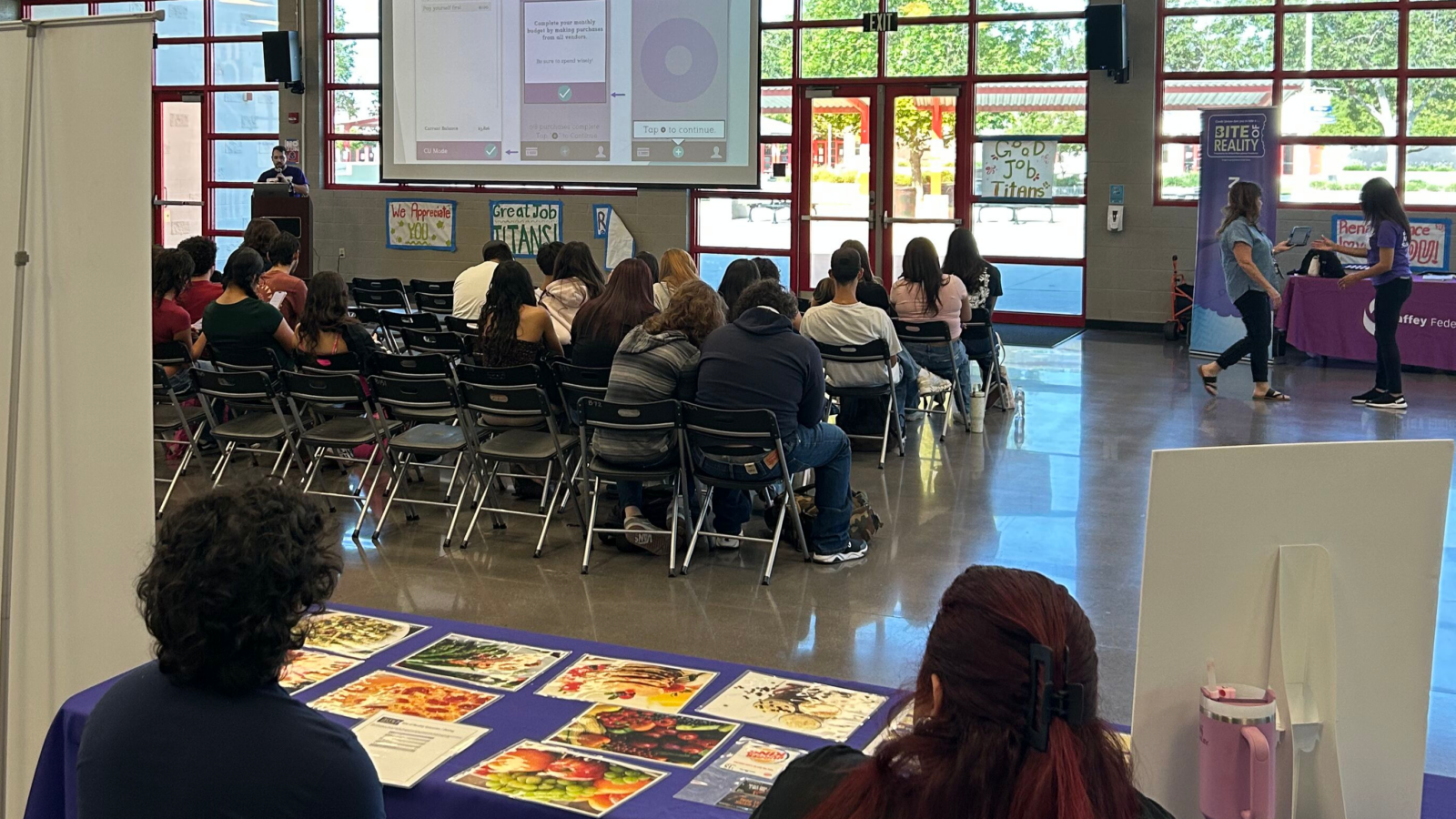
Two back-to-back days of Bite of Reality at Colony High School – giving students a safe space to practice using budgets and credit before they graduate.
Arroyo Valley High School College and Career Fair! The Chaffey FCU Team offered financial education and free resources to graduating students to help them get to know the Credit Union world and build their financial knowledge.
We spent the day at Bonita USD’s Career and Resource fair, preparing students with handouts on getting ready for your first job, understanding your first paycheck, and budgeting!
Financial Education courses with Colony High School! Our Financial Empowerment Specialist introduced students to a variety of foundational financial skills: banking services, budgeting, credit & lending, and more.
This is the search overlay. Use the Escape key to close it.
You are leaving the Chaffey Federal Credit Union website
You are being directed to a third-party website.
Please note that this third-party website is not controlled by Chaffey Federal Credit Union or subject to our privacy policy.
Thank you for visiting our site. We hope your visit was informative and enjoyable.