

Imposter Scams have recently been named the #1 most common scam in 2025 by the Federal Trade Commission – this is the 9th year in a row Imposter Scams have topped the charts. In 2025 alone, that totaled up to over 1 million imposter scam reports with total losses of $3.5 billion. These numbers don’t even include all of the cases that don’t get reported.
Understanding imposter scams is the first (and strongest) defense to keep you protected from the most common scam type across the United States.
How to Identify an Imposter Scam
Imposter Scams commonly reach victims through a variety of different channels: phone calls, emails, text messages, or social media. By faking caller ID and email addresses, using fake ID numbers, or replicating official messages, scammers attempt to trick you into thinking they are with a legitimate business or government organization.
The key to differentiating Imposter Scams from official messages, is how they communicate with you:
- Pressure you with false urgency or emergency scenarios
- Threaten you with penalties, fines, or legal activity
- Ask you to pay with unusual payment methods: wires, Zelle, cryptocurrency, mailing cash or gift cards, or even sharing account details
- Provide suspicious links, inconsistent grammar, or misspelled words and websites
The Most Common Types of Imposters to Look out For
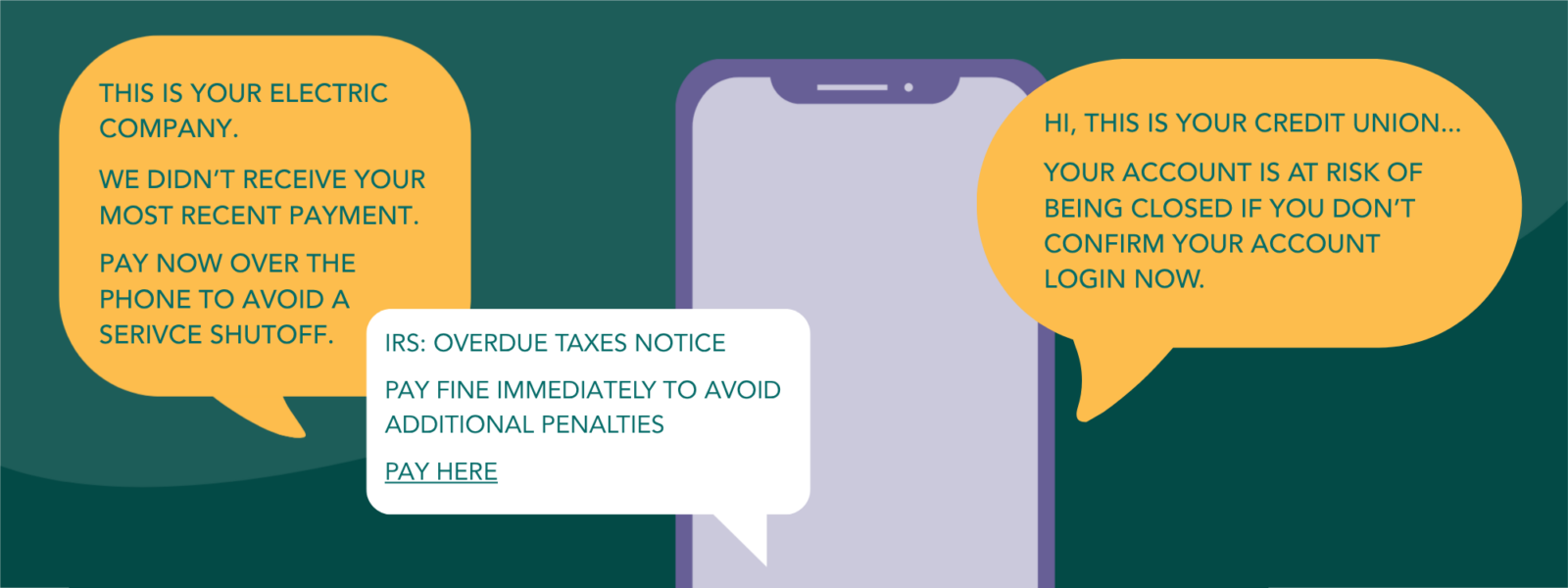
Government Organizations: Scammers may pose as representatives from a variety of Government Organizations, hoping to scare you into acting fast without any additional thought. If you receive an unexpected, urgent message from a Government Official, it’s likely you have received a scam attempt:
Utility Services: By pretending to be a representative from gas, electric, or internet services, fraudsters get victims to act quickly by threatening to shut off services due to “unpaid fees” unless you send funds or share payment details immediately.
Financial Institution: Scammers contact you posing as an employee at your credit union, the National Credit Union Administration or other financial institution. They often pressure victims to move funds or share account details, and may threaten fees, account closure, or compromised accounts to get you to act quickly.
Charity Groups: Fraudsters will pose as charitable groups via website spoofing, posting on fundraising sites, or faking community outreach. They aim to take funds intended for actual charities and organizations. These scams tend to spike after emergencies or national disasters when more people seek to donate support to the impacted groups.
Delivery Services: If you have ever received a delivery related message without ordering an item, you likely received a Delivery Service scam. Scammers will pose as FedEx, UPS, or other services by sending you a message asking you to confirm an order, pay a delivery fee, or resolve an issue when the link actually works to steal your information.
Family or Friend Impersonators: With evolving technology, some scammers now spoof Caller ID or use voice replication technology to clone voices from videos shared social media or other online sources. They use these tools to pretend to be known family members, asking you to send funds to help them over an unexpected cost or to help them get out of trouble.
- This scam often targets older audiences, and has been dubbed “Grandparent Scams” by the Federal Communications Commission
How to Protect Yourself from Imposter Scams
- Stay Skeptical. These fraud attempts work by scaring, pressuring, and rushing their victims. By keeping an air of caution around any unexpected communications, you can distance yourself from being emotionally moved by potential scammers.
- End the Conversation. Step away from the text, call, social media account or other message to allow yourself time to think or calm down before reacting.
- Call the official contact number of the organization, company, or institution from their official website to confirm if there is an actual concern or if a scammer contacted you. If you are a potential victim of a Family Member or Friend Imposter Scam, call the number saved in your contacts or a mutual connection.
- Contact Chaffey FCU and report the attempt. If you had communication with a scammer and are unsure if you provided any potentially sensitive information, a Chaffey FCU representative can help you determine if any additional precautions should be taken.
Why You Should Report Imposter Scams
Imposter Scams are often large-scale operations: if you come across an Imposter Scam, there’s likely countless other individuals the scammers are targeting. While not every case can be resolved, reports help officials create cases to take down fraud groups and establish fraud prevention alerts. Your report could be the missing puzzle piece to help track a scam’s origin or save the next victim.
Report any Imposter Scam attempts or cases you experience to: